
Building a Sustainable Vegetation Management Cycle at LREC
By Abe Nebgen System Arborist
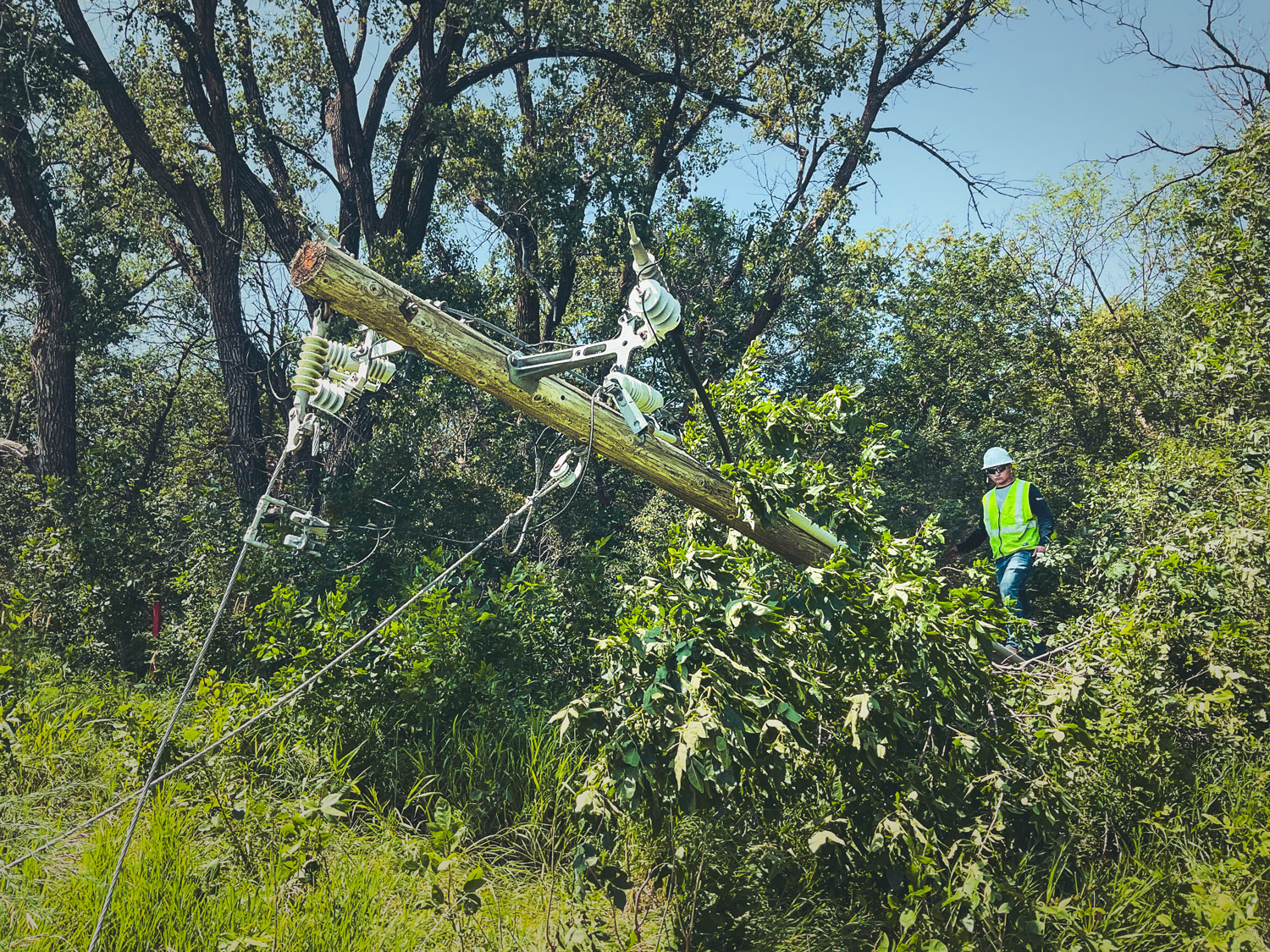
LREC’s Vegetation Management (VM) Program has gained momentum over the past six years, fueled by increased budgets, dedicated policy implementation, technological advancements, better planning, enhanced efficiencies, and thorough audits. Although crews clear only about 10% of the system each year, tree-growth-related outages continue to decline. This pattern supports the program’s effectiveness and suggests LREC is successfully prioritizing areas with the greatest need.
Preserving these results is essential, and even the limited short-term data show a positive effect. In 2025, crews completed work on 198 line miles across nine circuits — the subdivision level at which VM is managed. In 2026, they are on track to complete 300 line miles across nine circuits. These years provide the most meaningful comparison because the VM policy has been applied consistently only during this period. The policy requires additional tree removals within the LREC maintenance corridor, increasing the effort required per mile and limiting the total mileage crews can complete. However, it also creates a more sustainable and consistent maintenance cycle that is easier to maintain over time.
Completing this work at appropriate intervals may also reduce spending per circuit: data from circuits trimmed twice within seven years indicate potential savings of 10% to 43%.
That being said, because forest composition varies across LREC’s service area, a fixed rotation length is impractical. Through its partnership with AiDash, LREC has developed a hybrid VM cycle that directs work to circuits based on their individual vegetation management needs.
Implementing the hybrid VM cycle will be challenging because LREC’s distribution network spans 3,300 miles and vegetation management is expensive. In June, the Board reviewed a proposed seven-year implementation plan, but securing sufficient funding remains the primary obstacle.
Overall, LREC’s VM results to-date demonstrate meaningful improvements in both reliability and operational efficiency. Reduced tree-related outages, improved prioritization, and a more consistent maintenance approach provide confidence in our path forward.
Most importantly, I am deeply grateful for the continued support of our members. Your trust and investment in the VM program make this work possible and help ensure a safer, more reliable electric system. Together, we will continue building a sustainable vegetation management program that delivers long-term value for LREC and its members.