
Summary of 2026 Rate Changes
New rates effective March 1st, 2026 • Frequently Asked Questions are listed below.
| Rate Class | Previous Rate | New Rate (March 2026) | Unit |
|---|---|---|---|
| General Service (Residential and Farm) | |||
| Facility Charge | $39.00 | $45.00 | /mo |
| Energy – Summer (June, July, August) | $0.1100 | $0.1240 | /kWh |
| Energy – Other Months | $0.0960 | $0.1100 | /kWh |
| Power Cost Adjustment | $0.0065 | $0.0000 | /kWh |
| Small Commercial | |||
| Facility Charge | $70.00 | $70.00 | /mo |
| Energy – Summer (June, July, August) | $0.1130 | $0.1261 | /kWh |
| Energy – Other Months | $0.1000 | $0.1131 | /kWh |
| Power Cost Adjustment | $0.0065 | $0.0000 | /kWh |
| Large Commercial | |||
| Facility Charge | $100.00 | $100.00 | /mo |
| Demand Charges | |||
| Summer (June–August) | $20.00 | $20.00 | /kW |
| Winter (December–February) | $14.00 | $14.00 | /kW |
| All Other Months | $8.00 | $8.00 | /kW |
| All Energy | $0.0685 | $0.0790 | /kWh |
| Power Cost Adjustment | $0.0065 | $0.0000 | /kWh |
| Interruptible | |||
| Facility Charges | |||
| Small | $100.00 | $100.00 | /mo |
| Large | $170.00 | $170.00 | /mo |
| Energy Charges | |||
| Small | $0.0500 | $0.0668 | /kWh |
| Large | $0.0500 | $0.0618 | /kWh |
| Demand Charges | |||
| Summer Coin Demand | $28.00 | $28.00 | /kW |
| Winter Coin Demand | $22.00 | $22.00 | /kW |
| All Other Months Coin | $16.00 | $16.00 | /kW |
| Non-coin Demand | $6.50 | $6.50 | /kW |
| Excess Demand | $5.00 | $5.00 | /kW |
| Power Cost Adjustment | $0.0065 | $0.0000 | /kWh |
| Irrigation | |||
| Facility Charges | |||
| Single | $100.00 | $100.00 | /mo |
| Triple | $170.00 | $175.00 | /mo |
| Controlled Demand Charge | $3.50 | $3.80 | /kW |
| Uncontrolled Demand Charge | $10.00 | $13.00 | /kW |
| All Energy | $0.0665 | $0.0804 | /kWh |
| Power Cost Adjustment | $0.0065 | $0.0000 | /kWh |
| Leased Lighting | |||
| 45W LED (100W Equivalent) | $11.80 | $12.15 | /mo |
| Load Management Rates | |||
| Interruptible Heating | |||
| Summer | $0.0680 | $0.0738 | /kWh |
| Other Months (Domestic) | $0.0610 | $0.0668 | /kWh |
| Other Months (Non-Domestic) | $0.0680 | $0.0738 | /kWh |
| Off-Peak Storage (ETS) | $0.0550 | $0.0646 | /kWh |
| EV Time of Use | |||
| Off-Peak | $0.0707 | $0.0890 | /kWh |
| Intermediate | $0.1095 | $0.1700 | /kWh |
| On-Peak Summer | $0.4734 | $0.5000 | /kWh |
| On-Peak Other Months | $0.3582 | $0.4000 | /kWh |
Frequently Asked Questions
LREC’s last blanket rate adjustment was September 1st, 2023.
This rate increase is driven by rising costs that are outside of LREC’s control. Our wholesale power supplier, Great River Energy (GRE), is experiencing higher costs due to increased energy prices in the wholesale market, largely influenced by natural gas prices and the construction or upgrade of transmission lines. GRE is also investing heavily in new transmission infrastructure. These projects require additional staffing, increased borrowing for construction, and a planned $5 million margin increase in 2026 to help secure favorable financing. At the same time, the cost of essential materials—such as transformers, meters, and wire—remains at historic highs, affecting both GRE and LREC. Despite these challenges, LREC continues to pursue efficiencies and cost saving measures to benefit our members.
The cooperative has worked hard to minimize the impact on members, but wholesale power costs continue to rise and over half of overall expenses. In addition, the price of equipment, materials, and system improvements has increased. Absorbing these additional costs is not sustainable without compromising reliability or the cooperative’s long‑term system needs.
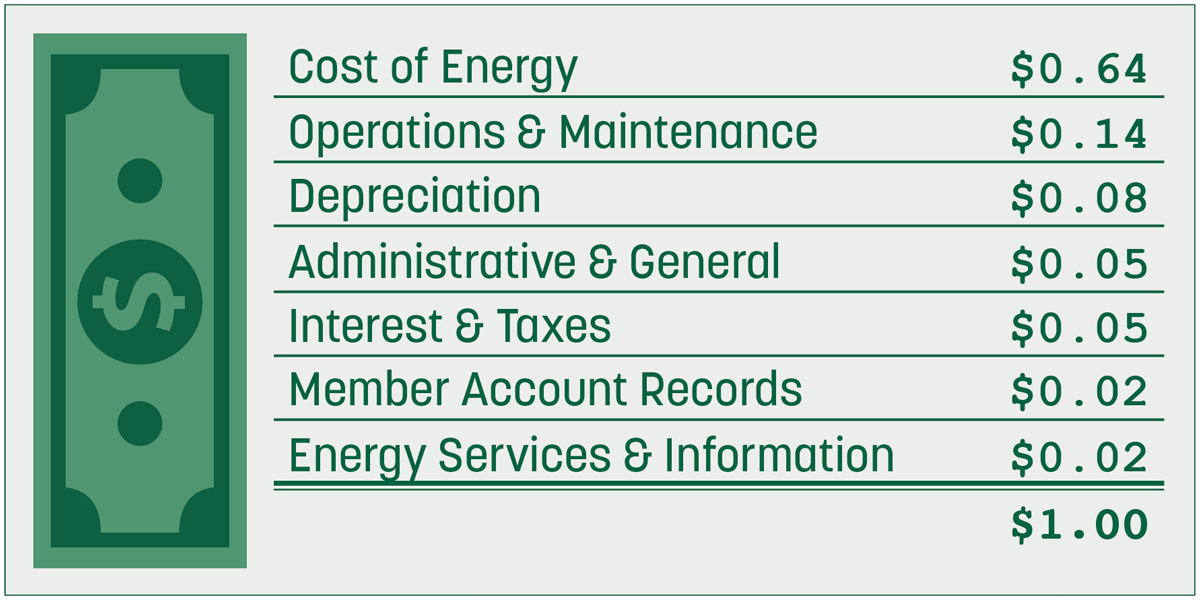
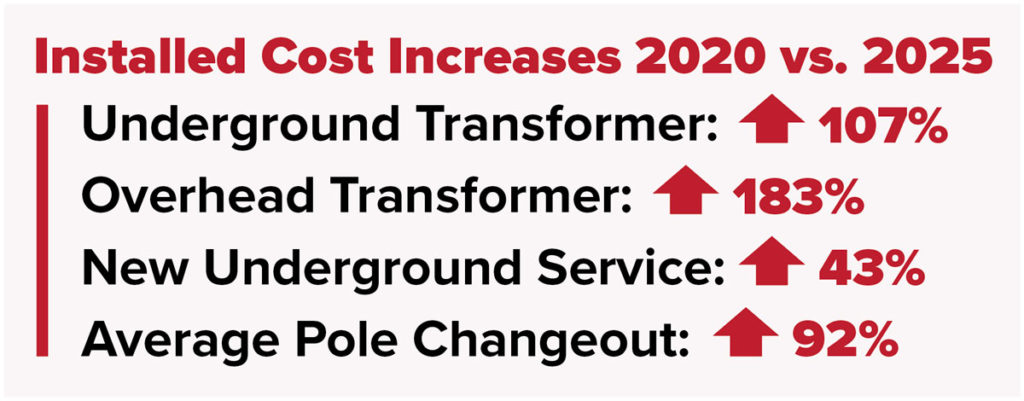
LREC completed a cost-of-service study starting in the fall of 2025, the results showed that our facility charge was not covering our fixed costs (substations, poles, wires, transformers, meters, etc.) to deliver power to our member’s services. When it was determined that LREC needed additional revenue, due to increases in wholesale power costs, along with other inflationary pressures, the board of directors also voted to adjust our rates to match the recommendation of the cost-of-service study, which called for an increased facility charge to cover our increase in fixed costs and an increased energy rate to cover increases in our wholesale power costs.
The facility charge covers the fixed costs of delivering power to a service – whether or not energy is being used at that location – including:
- Substations
- Poles & Wires
- Transformers
- Meters
- Vegetation Management
- Line Maintenance
- Outage Restoration
- Service Vehicles
- Billing
Energy use doesn’t affect the facility charge because this charge pays for the parts of the electric system that are always there for you—whether you used power that month or not. Even if your usage is zero, items listed above that serve your location still need to be built, maintained, and ready to deliver electricity whenever you need it. The facility charge helps cover those ongoing costs, so power is available at your service 24/7.
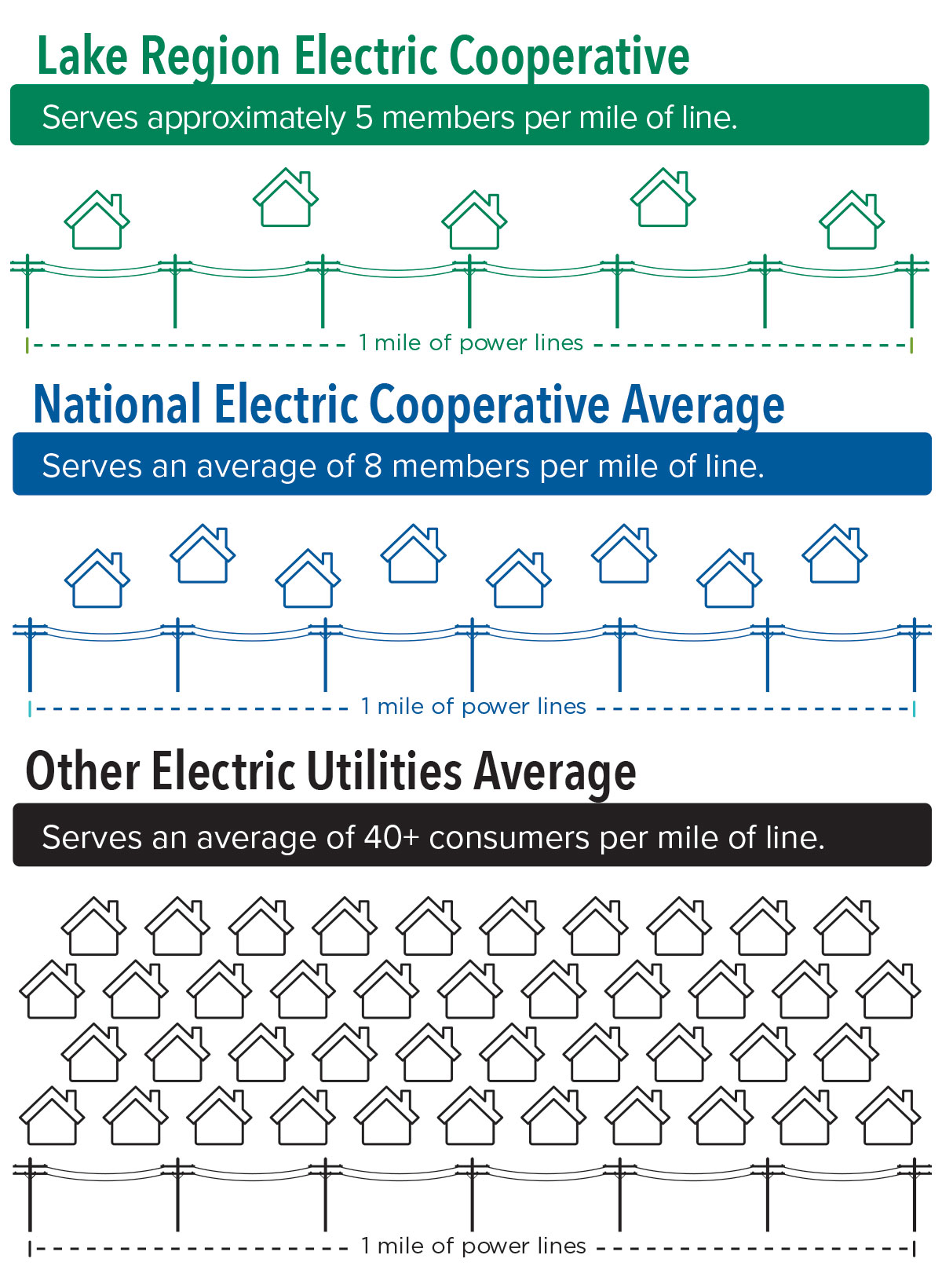
LREC has about 5 members per mile of line while investor-owned and municipal utilities have 40+ customers per mile. This means that LREC has fewer members to share those costs compared to an investor-owned or municipal utility, resulting in a higher facility charge.
No. As a member‑owned, nonprofit cooperative, LREC sets its rates solely to cover the cost of delivering electric service. All revenue is used to operate, maintain, and enhance the system, including investments in reliability, resilience, and required renewable energy initiatives. Any margins left at year-end are allocated back to our members in the form of capital credits
For General Service (Farm/Residential) members, the monthly facility charge will move from $39 to $45. For a member using around 1,000 kWh, this results in an average monthly increase of approximately $13.50. See the table above for more information.
Small User: 500 kWh /month | $9.75 /month increase
Medium User: 1,000 kWh /month | $13.50 /month increase
Large User: 2,000 kWh /month | $21.00 /month increase
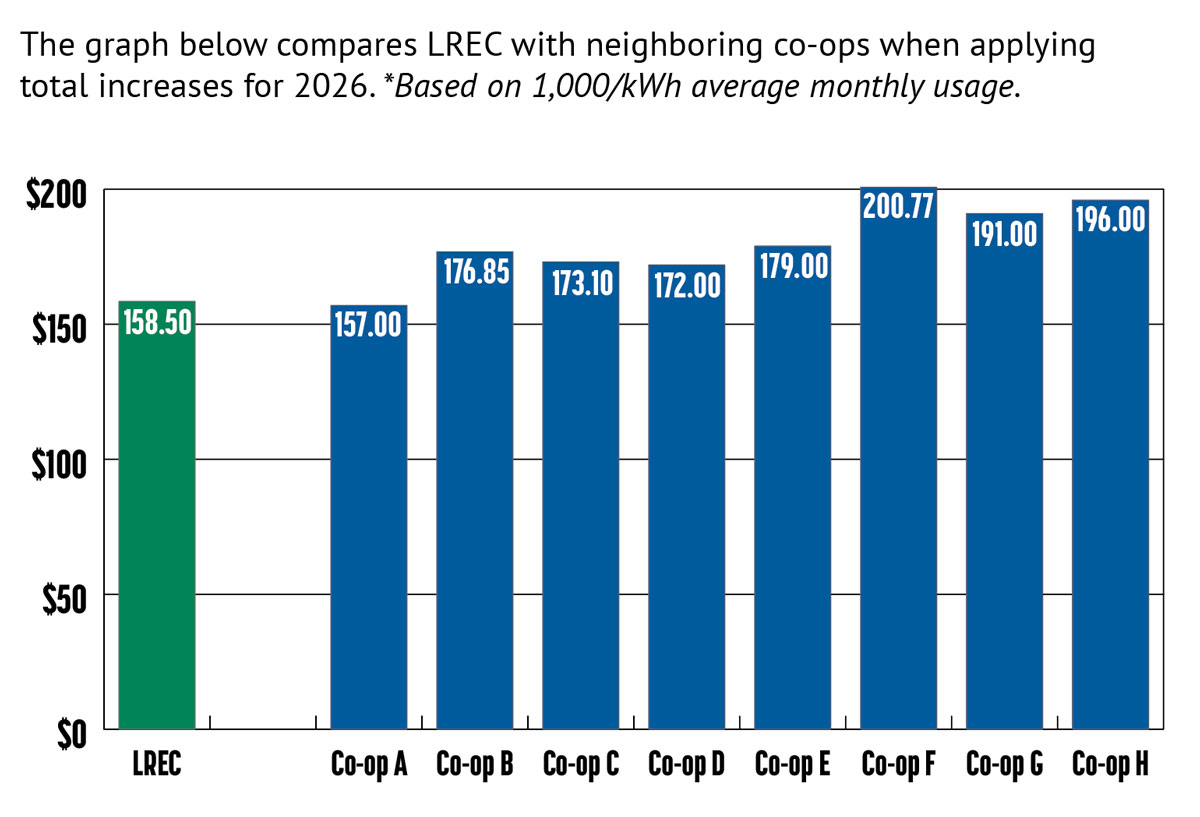
Our rates remain competitive compared to similar and neighboring co-ops in Minnesota. Nearly all co-ops across the state are planning rate increases in 2025/2026, ranging from 3.8% to 15.4%. Even with the increase, our rates will continue to be at or below those of comparable Minnesota co-ops.
Changes will take effect on March 1, 2026, and will appear on the bill you receive in early April.
Yes – LREC’s power cost adjustment (PCA) reflects the cost of our purchased wholesale power and allows us to align our rates with the cost of wholesale power. Each month LREC calculates the difference between our purchased power costs and our rates. That difference, whether positive or negative, is passed through to our members. If wholesale energy market prices drop, our wholesale purchased power cost will decrease resulting in a PCA credit on your bill.
| Rate | Rate (/kWh) | Propane Equivalent |
| Domestic, Summer | $0.0738 | $1.83 |
| Domestic, Other Months | $0.0668 | $1.66 |
| Non-Domestic, Year-Round | $0.0738 | $1.83 |
| Non-Domestic, Other Months | $0.0738 | $1.83 |
Being a cooperative member means you are an owner, a participant in governance, and a direct beneficiary of the co‑op’s success. Unlike a traditional company where you purchase a product or service, but you don’t have ownership or influence over how the business is run. This means that every decision made by LREC and by our wholesale power provider, Great River Energy are made with our members’ best interests at heart, prioritizing reliability and value for our member-owners, not shareholder profits.
We understand that any rate adjustment can impact household budgets. To help manage monthly expenses, members have access to tools such as budget billing and payment arrangements. Members can also reduce their energy costs through load management programs and energy‑efficiency rebates. In addition, LREC works with state and local agencies to connect eligible households with energy assistance, weatherization services, and other community resources.
Yes. LREC remains financially strong and follows sound long-term financial practices. The cooperative carefully manages expenses, regularly reviews rates through cost‑of‑service studies, and plans investments to maintain reliable service. Making adjustments when necessary, helps ensure LREC can continue operating responsibly and meet future system and regulatory requirements.
We know that any change in rates affects your household or business, and it’s not something we take lightly. We remain committed to keeping rates as steady and affordable as possible.
However, our region is experiencing one of the most significant periods of change in the history of the electric grid. Utilities across Minnesota—and throughout the Midwest—are making major upgrades to ensure the grid can meet today’s demands, support future growth, and prepare for the state’s 2040 carbon‑free energy standard.
Our wholesale power provider, Great River Energy, is among those leading this effort. Along with other utilities in the region, they are investing billions of dollars in transmission projects. These upgrades are essential for safely and reliably moving energy from generation sources to homes, farms, and businesses across the state.
While these improvements will strengthen the grid for decades to come, they do come with significant costs. As a result, additional rate adjustments will be necessary in the future.We will continue to communicate openly about these changes and the investments being made to ensure reliable, affordable, and sustainable energy for all our members.
Members can reduce their energy use and lower their bills by taking advantage of load management programs, rebates and other conservation options. Visit our website, see the links below or call our office to learn more.
How to save:
- Participate in load management programs
- Complete a virtual home energy audit with our partner ZeroHomes, to create a plan that will increase the efficiency of your home. – https:/lrec.coop/zerohomes
- Rebates & tax incentives – https://www.energystar.gov/about/federal-tax-credits
- Monitor usage with SmartHub
https://www.energystar.gov/products/recent_program_updates/low-no-cost-tips
https://mn.gov/commerce-stat/pdfs/home-energy-guide.pdf
https://www.energy.gov/energysaver/fall-and-winter-energy-saving-tips
Call our office anytime at (800) 552-7658, visit us at www.lrec.coop, or text us at (218) 853-5732. We’re happy to help answer any questions.