Every electric service, whether it’s a home, farm, or business, requires equipment and infrastructure to deliver reliable power. These are fixed costs—expenses that do not change based on how much electricity is used.
Examples of fixed costs include:
- Poles and wires that carry electricity
- Transformers and substations that manage voltage and distribution
- Meters that measure usage
- Trucks, tools, and maintenance required to keep the system running safely and reliably
Even if no electricity is used at a location, these costs still exist because the cooperative must maintain the system so that power is available at any time.
What Is a Facility Charge?
A facility charge is the portion of your monthly bill that helps cover these fixed costs of providing electric service. It ensures that everyone who benefits from having power available contributes a fair share toward maintaining the infrastructure that makes that possible.
In addition to the facility charge, members also pay a metered energy cost based on how much electricity is consumed. Together, these two parts of your bill—one fixed and one variable—allow the cooperative to recover the costs of both maintaining the electric system and supplying the energy that flows through it.
Why It’s Important
The facility charge provides stability for the cooperative and fairness among members. It ensures that the costs of maintaining poles, wires, and equipment are shared equitably—so that all members help support the reliability of the electric system, regardless of how much or how little electricity they use.
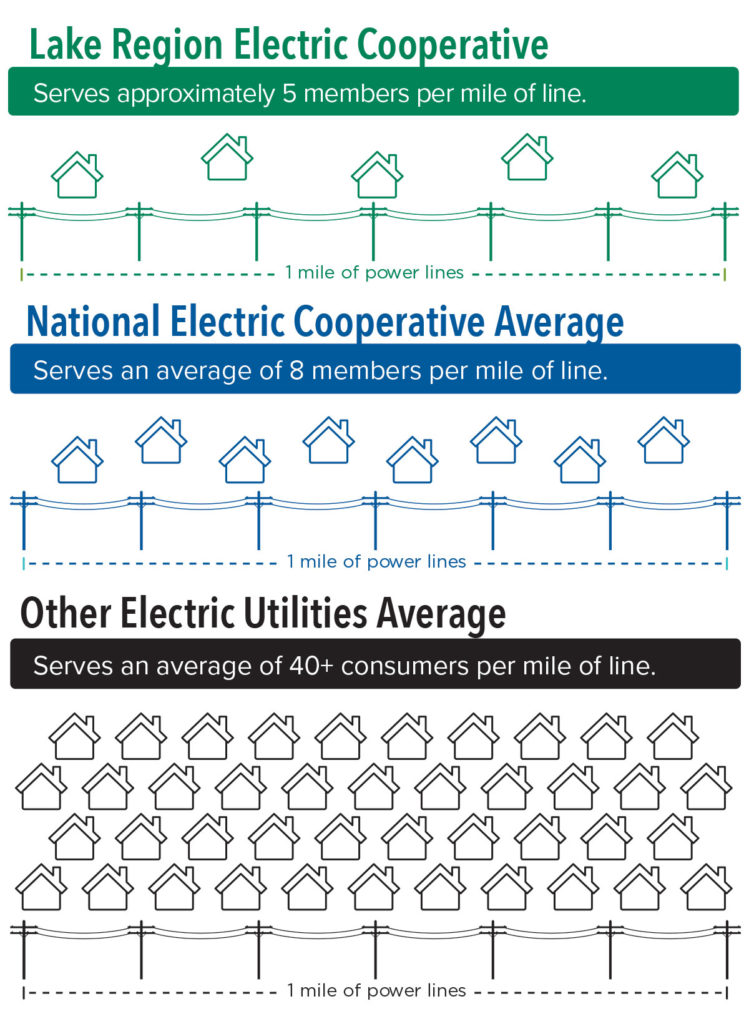
Because Lake Region Electric Cooperative (LREC) serves a large area with relatively few members per mile of line—about five, compared to 40 or more for many investor-owned and municipal utilities—each member’s share of these fixed costs is higher. Despite this, LREC still collects less revenue per mile of line than those larger utilities.
LREC continually looks for ways to operate efficiently and manage costs while maintaining the safe, reliable service members depend on every day.
The Electric Grid
The electric grid is considered one of the most complex machines in the world, quietly and consistently delivering the electricity we need for everyday life.
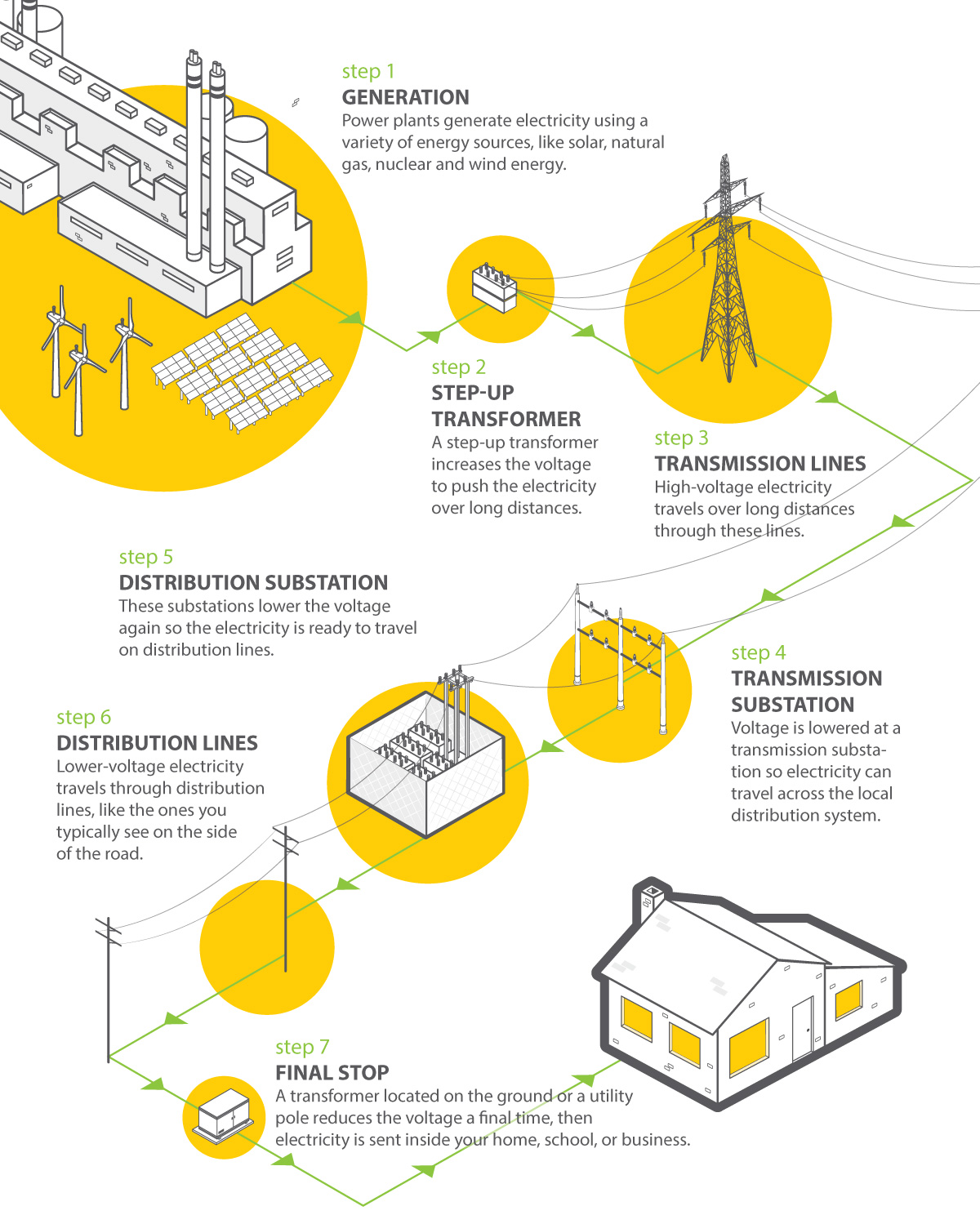
If you look at the graphic below, you’ll see there are a number of steps to ultimately deliver power to its final stop — your home. These steps involve fixed costs such as poles, wires, transformers, meters, etc; not to mention the maintenance of all these items. The costs for these things are incurred whether or not energy is being used at a service location.
To ensure these costs are properly recovered—regardless of how much/little energy is consumed—it is common for utilities to bill a fixed facility charge in addition to a metered energy cost. This ensures fixed costs are distributed fairly among members/consumers.