
Demand is the measurement of the maximum amount of electricity that is being used at one time. You could use the same amount of electricity as your neighbor on any given day, but if you are using most of that electricity during one hour after work, your DEMAND is higher than your neighbor’s, especially if it occurs during times of peak electrical usage.
Consider the following example of how two different hypothetical co-op members, Dave and Linda, spend their evening (note: in this example Linda is on a program that controls her water heater during periods of peak electrical usage in exchange for a lower energy rate for electricity used by the water heater).
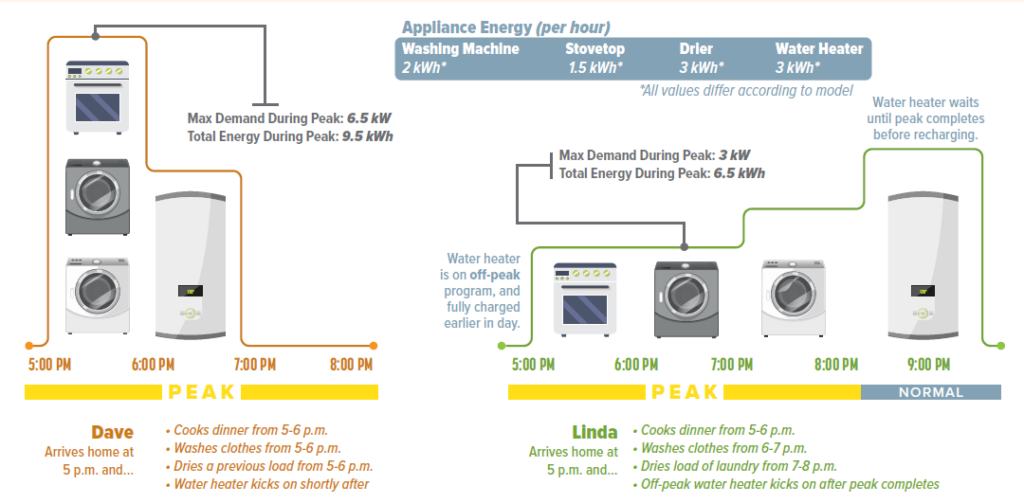
The result is that Linda’s demand is much lower than Dave’s, even though they have the same total energy use. It is also worth noting that Linda’s overall energy use during the peak electrical usage period is less as well. While Lake Region Electric Cooperative has the capacity to power all of its members’ homes and businesses during high-demand times of day (usually 6-9 a.m. and 5-8 p.m.), that high-demand electricity is provided to the co-op at a higher cost.
‘Beating the peak’ helps members and the cooperative save on these higher costs when they are mindful of their electricity-based tasks, and especially so when they take advantage of our various load control programs for both water heating and space heating. As a member, savings for the co-op are passed on to you in the form of stable electricity rates and a more reliable, balanced electric grid.